- 2 402 202 книги
- Поиск
libcats.org
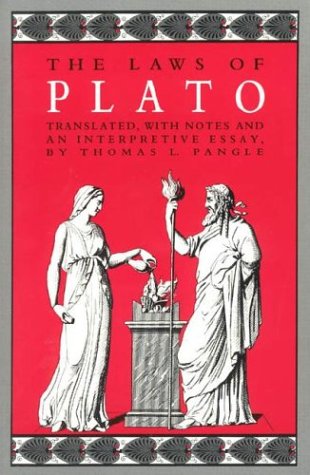


The Laws of Plato
Plato, Thomas L. PangleWhen one thinks of Plato and his ideas of politics, one naturally gravitates toward his best-known work, the Republic. In that book, Plato set up the ideal city-state, with classes born and bred to specific functions and roles in society, and a sense of philosophical outlook consistent across the board. However, such a society was unlikely to be brought out, in Plato's time and, as it turned out, in any other.
Plato tried at different times to persuade rulers to become his envisioned philosopher-king; the last attempt was with a tyrant of Syracuse, who in the end imprisoned Plato rather than following his directions. Plato wrote this work, 'The Laws', as the last of his dialogues. Its difference from the Republic is immediately apparent in the absence of Socrates as a character - Plato at the end of his life has finally taken to working in his own right and not through a proxy.
Just looking at the contents will show the breadth of this work - it involves practically every aspect of civil society: legislative bodies (and Plato has some scathing commentaries on some that he has known); education and its proper role and method (including even drinking parties as part of the educational process); ideas of monarchy, democracy, and the balance of power (some American constitutional ideas were generated from a reading (and occasional misreading) of this work); civil administration; arts and sciences; military and sports training; sexual conduct; economics; criminal law, torts, and judicial process; religion and theology; civil law, property and family law; Plato even argues for the need of a 'nocturnal council', one that delves not only into the practical aspects of the law, but also their philosophical bases.
According to translator and editor Trevor Saunders, 'The reader of the Republic who picks up the Laws is likely to have difficulty in believing that the same person wrote both.' Saunders speculates that Plato in his older years changed from optimism to pessimism, from idealism to realism, but that this is not all there is to the assumption, because in actual fact the transition from the Republic to the Laws involves transitioning unattainable ideals to attainable realities.
Plato describes the construction of a utopian society in great detail, down to the number of citizens permitted to live in the city (5040) and the length of time foreigners might reside in the city (20 years). This shows that Plato considers politics to be an exact science (indeed, despite the inclusion of the 'nocturnal council', he did see his system of laws being essentially unalterable through history). Plato is not averse to the use of force and coercion to set up and maintain the utopian society. Finally, Plato sees a self-contained kind of society that is likely to become xenophobic to the extreme, with less tolerance toward its own citizens than toward those foreigners permitted to live and work in the city. Indeed, for the virtuous citizens to be free to pursue their virtue, the majority of the manual work and crafts must be done by a worker class composed of slaves or immigrant workers, or both.
Plato's Laws suffer from much greater criticism in the modern world than the Republic, in part because it is a more 'realistic' work, with a reality that no longer applies. However, many of his insights are worthwhile, and the overall structure of his society reflected in the Laws is worth discussion as much as is that of the Republic. One of the problems with this work vis-a-vis the Republic is its length (the Laws is considerable longer); another problem is that it lacks the dramatic reading possible from the Republic, rather the difference between a political debate and a legal seminar. Still, it is an important work, showing how Plato's thought had shifted in his lifetime.
Plato tried at different times to persuade rulers to become his envisioned philosopher-king; the last attempt was with a tyrant of Syracuse, who in the end imprisoned Plato rather than following his directions. Plato wrote this work, 'The Laws', as the last of his dialogues. Its difference from the Republic is immediately apparent in the absence of Socrates as a character - Plato at the end of his life has finally taken to working in his own right and not through a proxy.
Just looking at the contents will show the breadth of this work - it involves practically every aspect of civil society: legislative bodies (and Plato has some scathing commentaries on some that he has known); education and its proper role and method (including even drinking parties as part of the educational process); ideas of monarchy, democracy, and the balance of power (some American constitutional ideas were generated from a reading (and occasional misreading) of this work); civil administration; arts and sciences; military and sports training; sexual conduct; economics; criminal law, torts, and judicial process; religion and theology; civil law, property and family law; Plato even argues for the need of a 'nocturnal council', one that delves not only into the practical aspects of the law, but also their philosophical bases.
According to translator and editor Trevor Saunders, 'The reader of the Republic who picks up the Laws is likely to have difficulty in believing that the same person wrote both.' Saunders speculates that Plato in his older years changed from optimism to pessimism, from idealism to realism, but that this is not all there is to the assumption, because in actual fact the transition from the Republic to the Laws involves transitioning unattainable ideals to attainable realities.
Plato describes the construction of a utopian society in great detail, down to the number of citizens permitted to live in the city (5040) and the length of time foreigners might reside in the city (20 years). This shows that Plato considers politics to be an exact science (indeed, despite the inclusion of the 'nocturnal council', he did see his system of laws being essentially unalterable through history). Plato is not averse to the use of force and coercion to set up and maintain the utopian society. Finally, Plato sees a self-contained kind of society that is likely to become xenophobic to the extreme, with less tolerance toward its own citizens than toward those foreigners permitted to live and work in the city. Indeed, for the virtuous citizens to be free to pursue their virtue, the majority of the manual work and crafts must be done by a worker class composed of slaves or immigrant workers, or both.
Plato's Laws suffer from much greater criticism in the modern world than the Republic, in part because it is a more 'realistic' work, with a reality that no longer applies. However, many of his insights are worthwhile, and the overall structure of his society reflected in the Laws is worth discussion as much as is that of the Republic. One of the problems with this work vis-a-vis the Republic is its length (the Laws is considerable longer); another problem is that it lacks the dramatic reading possible from the Republic, rather the difference between a political debate and a legal seminar. Still, it is an important work, showing how Plato's thought had shifted in his lifetime.
EPUB | FB2 | MOBI | TXT | RTF
* Конвертация файла может нарушить форматирование оригинала. По-возможности скачивайте файл в оригинальном формате.
Популярные книги за неделю:


Система упражнений по развитию способностей человека (Практическое пособие)
Автор: Петров Аркадий НаумовичКатегория: Путь к себе
Размер книги: 818 Kb
Сотворение мира (3-х томник)
Автор: Петров Аркадий НаумовичКатегория: Путь к себе
Размер книги: 817 Kb


Только что пользователи скачали эти книги:


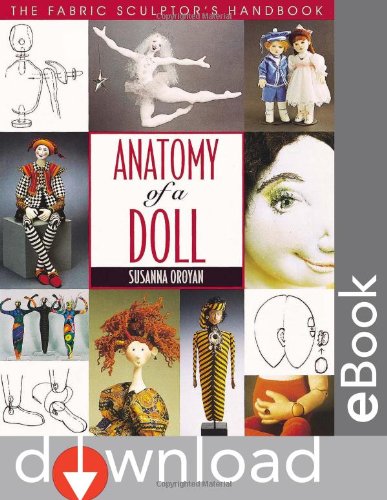
Anatomy of a Doll: The Fabric Sculptor's Handbook
Автор: Susanna OroyanКатегория: Медицина, Анатомия и физиология человека
Размер книги: 16.32 Mb
Agrell's ''Magico-Numerical'' Theory of the Runes
Автор: E. O. G. Turville-petre; A. S. C. Ross
Размер книги: 408 Kb


Spreadsheet Exercises in Ecology and Evolution
Автор: Therese M. Donovan, Автор: Charles Welden
Размер книги: 6.70 Mb

Heat Conduction: Mathematical Models and Analytical Solutions
Автор: Liqiu Wang, Автор: Xuesheng Zhou, Автор: Xiaohao WeiКатегория: M_Mathematics, MP_Mathematical physics
Размер книги: 2.36 Mb
Intra-Day Trading Strategies, Proven Steps
Автор: Cooper JeffКатегория: fiction
Размер книги: 3.35 Mb