- 2 402 202 книги
- Поиск
libcats.org
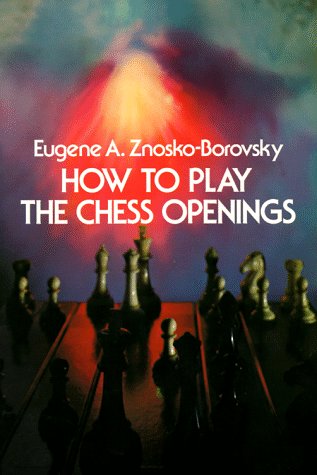



How to Play the Chess Openings
Eugene Znosko-BorovskyThis book was originally written in 1935. It is in descriptive notation (P-K4), 141 pages plus 7 pages of solutions to the 36 questions scattered through it.
As its title suggests, it is about the general principles behind the different openings. The explanations are clear and easy to follow, and as good as any I've seen. It keeps things simple and doesn't list dozens of complex variations that would overwhelm a beginner. The fact that it is only $8 is icing on the cake. Recommended!
I find only minor shortcoming for this sort of book. Algebraic notation would be better these days, but we have only the laziness of the publisher to blame for that. Descriptive notation should not deter a potential reader - it is no harder to learn than learning how a knight moves! The modern and hypermodern lines do not get coverage proportional to their current popularity. When the book was written, Alekhine's defence was new on the scene, and it got 3 pages. The Sicilian got 4 pages.
Chess openings is a very difficult subject for beginners. When does the opening end and the middlegame start? How do I know that at the end of a given variation there are "about equal chances" or that "white has a slight advantage"? For general principles, this book is exactly what a beginner needs. For specific variations and their detailed analysis, things that only a serious chess player would worry about, one needs books that specialize in one opening or only one line (e.g. Sicilian Najdorf). To stay current, one needs the Chess Informant. The trouble with such books is that they get outdated very quickly. These days a better option is a computerized database, possibly with a subscription service to stay current. Computers have changed the way an advanced player studies openings. But the beginner still needs a book like this one. For a more modern introduction, with algebriac notation, I recommend Seirawan's book "Winning Chess Openings", ISBN 1857443497. It is thicker at 250 pages, but is easy to read.
No single book will convert you from a beginner to a master - only hard work can do that. However, each book you read will put a little more wind in your sail.
As its title suggests, it is about the general principles behind the different openings. The explanations are clear and easy to follow, and as good as any I've seen. It keeps things simple and doesn't list dozens of complex variations that would overwhelm a beginner. The fact that it is only $8 is icing on the cake. Recommended!
I find only minor shortcoming for this sort of book. Algebraic notation would be better these days, but we have only the laziness of the publisher to blame for that. Descriptive notation should not deter a potential reader - it is no harder to learn than learning how a knight moves! The modern and hypermodern lines do not get coverage proportional to their current popularity. When the book was written, Alekhine's defence was new on the scene, and it got 3 pages. The Sicilian got 4 pages.
Chess openings is a very difficult subject for beginners. When does the opening end and the middlegame start? How do I know that at the end of a given variation there are "about equal chances" or that "white has a slight advantage"? For general principles, this book is exactly what a beginner needs. For specific variations and their detailed analysis, things that only a serious chess player would worry about, one needs books that specialize in one opening or only one line (e.g. Sicilian Najdorf). To stay current, one needs the Chess Informant. The trouble with such books is that they get outdated very quickly. These days a better option is a computerized database, possibly with a subscription service to stay current. Computers have changed the way an advanced player studies openings. But the beginner still needs a book like this one. For a more modern introduction, with algebriac notation, I recommend Seirawan's book "Winning Chess Openings", ISBN 1857443497. It is thicker at 250 pages, but is easy to read.
No single book will convert you from a beginner to a master - only hard work can do that. However, each book you read will put a little more wind in your sail.
Популярные книги за неделю:


Система упражнений по развитию способностей человека (Практическое пособие)
Автор: Петров Аркадий НаумовичКатегория: Путь к себе
Размер книги: 818 Kb
Сотворение мира (3-х томник)
Автор: Петров Аркадий НаумовичКатегория: Путь к себе
Размер книги: 817 Kb


Elementary surveying. An introduction to geomatics
Автор: Ghilani C.D., Автор: Wolf P.R.Категория: P_Physics, PGp_Geophysics
Размер книги: 43.64 Mb
Только что пользователи скачали эти книги:
Воскрешение неумиравшего, или Жанры не горят (Предисловие)
Автор: Вулис Абрам ЗиновьевичКатегория: Публицистика
Размер книги: 39 Kb
String Topology and Cyclic Homology
Автор: Ralph L. Cohen, Автор: Kathryn Hess, Автор: Alexander A. Voronov
Размер книги: 1.26 Mb
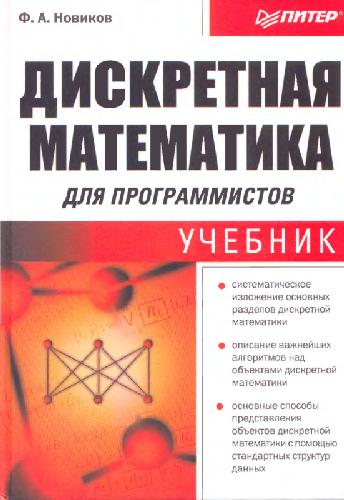
Дискретная математика для программистов
Автор: Новиков Ф.А.Категория: Computer science, Дискретная математика
Размер книги: 2.32 Mb


Keine Panik vor Statistik!: Erfolg und Spaß im Horrorfach aller nichttechnischen Studiengänge
Автор: Markus Oestreich, Автор: Oliver RombergКатегория: Образование
Размер книги: 8.11 Mb
Neonatal Formulary: Drug Use in Pregnancy and the First Year of Life, 5th edition
Автор: Cathryne Hall
Размер книги: 1.64 Mb
