- 2 402 202 книги
- Поиск
libcats.org
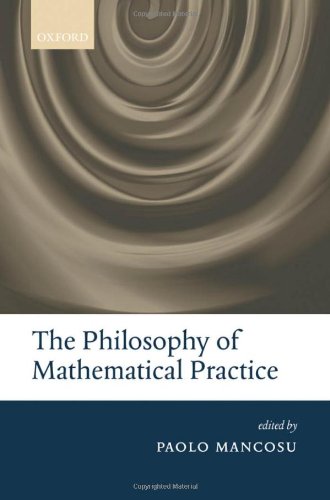



The Philosophy of Mathematical Practice
Paolo MancosuThis book is pretty useless. A chapter conclusion summarises well the entire book: the philosophy of mathematical practice "offers a vast and virgin territory to exploration" and "Most of the work remains to be done" (p. 148). Of course no potential reader would disagree with these trivialities. It is a pity, however, that the entire book is little but a constant reiteration of this call to arms, while the work that everyone keeps pointing to remains virtually untouched.
I offer a partial diagnosis as to the reasons for book's failure: the formalistic point of view has not been rejected with sufficient zeal and conviction. The authors in this volume agree that formalism is not everything but their alternatives are meant to be modest and polite complements rather than serious alternatives. Look at the history of philosophy of mathematics: Plato, Pascal, Kepler, Descartes, Leibniz, Kant, Poincaré, Brouwer, Weyl, etc. All of these people would have said that logic and symbols and whatever formal systems you can come up with just fundamentally miss the point: what drives mathematics is the human cognitive capacities, innate intuitions, etc. This point of view predicted the shortcomings of the formalistic fad to the letter. Yet the authors in this volume refuse to draw the obvious conclusions. The cognitive perspective is condemned for no good reason for example by Avigad in his chapter on understanding:
"We have all had such 'Aha!' moments and the deep sense of satisfaction that comes with them. But surely the philosophy of mathematics is not supposed to explain this sense of satisfaction, any more than economics is supposed to explain the feeling of elation that comes when we find a $20 bill lying on the sidewalk." (p. 322).
All the above thinkers would have agreed that "Aha" experiences are to be explained in terms of the nature of the human cognitive endowment. To say that "surely" this would be stupid, on the basis of nothing more than a pathetic parallel to economics, is to dismiss the major historical alternative to formalism all too easily.
One further example: Tappenden argues in chapter 9 "that mathematical defining is a more intricate activity, with deeper connections to explanation, fruitfulness of research, etc. than is sometimes realised" (p. 272). Like so many other "theses" presented in this book, this is a complete triviality from the cognitive point of view. In the mind there are ideas. When these are projected onto a formal presentation it happens that some ideas map to definitions, other to theorems, others to proofs, etc. Only someone who thought that this projection onto the formal representation was not a projection but a mere equation would think that properties of the images of ideas was an accurate description of the ideas themselves, and so commit the error that Tappenden says occurs "sometimes."
I offer a partial diagnosis as to the reasons for book's failure: the formalistic point of view has not been rejected with sufficient zeal and conviction. The authors in this volume agree that formalism is not everything but their alternatives are meant to be modest and polite complements rather than serious alternatives. Look at the history of philosophy of mathematics: Plato, Pascal, Kepler, Descartes, Leibniz, Kant, Poincaré, Brouwer, Weyl, etc. All of these people would have said that logic and symbols and whatever formal systems you can come up with just fundamentally miss the point: what drives mathematics is the human cognitive capacities, innate intuitions, etc. This point of view predicted the shortcomings of the formalistic fad to the letter. Yet the authors in this volume refuse to draw the obvious conclusions. The cognitive perspective is condemned for no good reason for example by Avigad in his chapter on understanding:
"We have all had such 'Aha!' moments and the deep sense of satisfaction that comes with them. But surely the philosophy of mathematics is not supposed to explain this sense of satisfaction, any more than economics is supposed to explain the feeling of elation that comes when we find a $20 bill lying on the sidewalk." (p. 322).
All the above thinkers would have agreed that "Aha" experiences are to be explained in terms of the nature of the human cognitive endowment. To say that "surely" this would be stupid, on the basis of nothing more than a pathetic parallel to economics, is to dismiss the major historical alternative to formalism all too easily.
One further example: Tappenden argues in chapter 9 "that mathematical defining is a more intricate activity, with deeper connections to explanation, fruitfulness of research, etc. than is sometimes realised" (p. 272). Like so many other "theses" presented in this book, this is a complete triviality from the cognitive point of view. In the mind there are ideas. When these are projected onto a formal presentation it happens that some ideas map to definitions, other to theorems, others to proofs, etc. Only someone who thought that this projection onto the formal representation was not a projection but a mere equation would think that properties of the images of ideas was an accurate description of the ideas themselves, and so commit the error that Tappenden says occurs "sometimes."
Популярные книги за неделю:


Тестирование Дот Ком, или Пособие по жестокому обращению с багами в интернет-стартапах
Автор: Роман Савин
Размер книги: 5.26 Mb
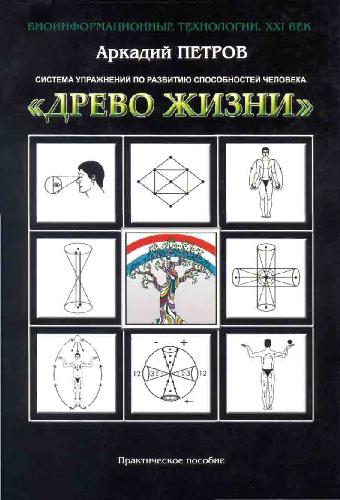
Система упражнений по развитию способностей человека (Практическое пособие)
Автор: Петров Аркадий НаумовичКатегория: Путь к себе
Размер книги: 818 Kb
Сотворение мира (3-х томник)
Автор: Петров Аркадий НаумовичКатегория: Путь к себе
Размер книги: 817 Kb

Только что пользователи скачали эти книги:

Global Unions?: Theory and Strategies of Organized Labour in the Global Political Economy (Routledge Ripe Studies I Global Political Economy)
Автор: Jeffrey HarrodКатегория: Образование
Размер книги: 1.92 Mb
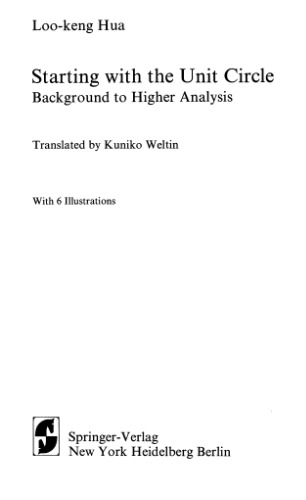
Starting with the Unit Circle: Background to Higher Analysis
Автор: Loo-keng HuaКатегория: Математика, Анализ
Размер книги: 1.18 Mb

You Wouldn't Want to Be a Roman Gladiator! (You Wouldn't Want To?)
Автор: John Malam, Автор: David Salariya
Размер книги: 2.90 Mb
