- 2 402 202 книги
- Поиск
libcats.org
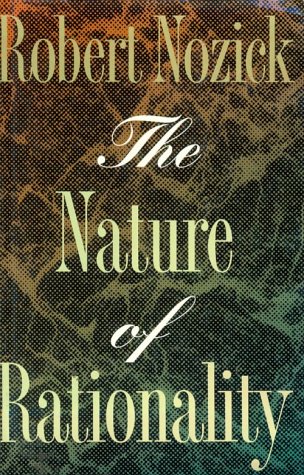
The nature of rationality
Robert NozickRepeatedly and successfully, the celebrated Harvard philosopher Robert Nozick has reached out to a broad audience beyond the confines of his discipline, addressing ethical and social problems that matter to every thoughtful person. Here Nozick continues his search for the connections between philosophy and "ordinary " experience. In the lively and accessible style that his readers have come to expect, he offers a bold theory of rationality, the one characteristic deemed to fix humanity's "specialness." What are principles for? asks Nozick. We could act simply on whim, or maximize our self-interest and recommend that others do the same. As Nozick explores rationality of decision and rationality of belief, he shows how principles actually function in our day-to-day thinking and in our efforts to live peacefully and productively with each other. In Nozick's view, misconceptions of rationality have resulted in many intractable philosophical problems. For example, the Kantian attempt to make principled behavior the sole ultimate standard of conduct extends rationality beyond its bounds. In this provocative volume, Nozick reformulates current decision theory to include the symbolic meaning of actions in areas from controlling impulses to fighting society's ""war against drugs.'' The author proposes a new rule of rational decision, ""maximizing decision-value,'' which is a weighted sum of causal, evidential, and symbolic utility. In a particularly fascinating section of the book he traces the implications of this rule for the famous Prisoner's Dilemma and for Newcomb's Problem. Rationality of belief, according to Nozick, involves two aspects: support by reasons that make the belief credible, and generation by a process that reliably produces true beliefs. A new evolutionary account explains how some factual connections are instilled in us as seemingly self-evident, thus reversing the direction of Kant's ""Copernican Revolution.'' Proposing a theory of rational belief that includes both the intellectual credibility of the belief and the practical consequences of believing it, Nozick also provides a fresh resolution of the ""lottery paradox.'' Finally, Nozick explores the scope and limits of instrumental rationality, or the effective and efficient pursuit of given goals, and suggests some new conditions on the rationality of goals. Throughout, the book combines daring speculations with detailed investigations to portray the nature and status of rationality and the essential role that imagination plays in this singular human aptitude. Repeatedly and successfully, the celebrated Harvard philosopher Robert Nozick has reached out to a broad audience beyond the confines of his discipline, addressing ethical and social problems that matter to every thoughtful person. Here Nozick continues his search for the connections between philosophy and "ordinary " experience. In the lively and accessible style that his readers have come to expect, he offers a bold theory of rationality, the one characteristic deemed to fix humanity's "specialness." What are principles for? asks Nozick. We could act simply on whim, or maximize our self-interest and recommend that others do the same. As Nozick explores rationality of decision and rationality of belief, he shows how principles actually function in our day-to-day thinking and in our efforts to live peacefully and productively with each other. In Nozick's view, misconceptions of rationality have resulted in many intractable philosophical problems. For example, the Kantian attempt to make principled behavior the sole ultimate standard of conduct extends rationality beyond its bounds. In this provocative volume, Nozick reformulates current decision theory to include the symbolic meaning of actions in areas from controlling impulses to fighting society's ""war against drugs.'' The author proposes a new rule of rational decision, ""maximizing decision-value,'' which is a weighted sum of causal, evidential, and symbolic utility. In a particularly fascinating section of the book he traces the implications of this rule for the famous Prisoner's Dilemma and for Newcomb's Problem. Rationality of belief, according to Nozick, involves two aspects: support by reasons that make the belief credible, and generation by a process that reliably produces true beliefs. A new evolutionary account explains how some factual connections are instilled in us as seemingly self-evident, thus reversing the direction of Kant's ""Copernican Revolution.'' Proposing a theory of rational belief that includes both the intellectual credibility of the belief and the practical consequences of believing it, Nozick also provides a fresh resolution of the ""lottery paradox.'' Finally, Nozick explores the scope and limits of instrumental rationality, or the effective and efficient pursuit of given goals, and suggests some new conditions on the rationality of goals. Throughout, the book combines daring speculations with detailed investigations to portray the nature and status of rationality and the essential role that imagination plays in this singular human aptitude.
EPUB | FB2 | MOBI | TXT | RTF
* Конвертация файла может нарушить форматирование оригинала. По-возможности скачивайте файл в оригинальном формате.
Популярные книги за неделю:


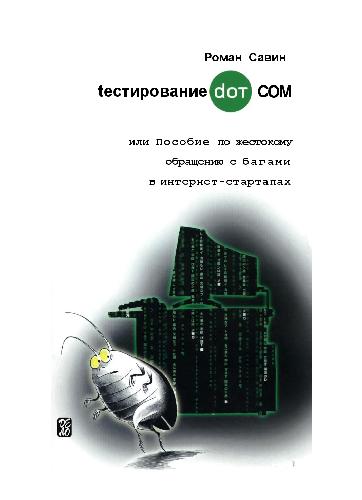
Тестирование Дот Ком, или Пособие по жестокому обращению с багами в интернет-стартапах
Автор: Роман Савин
Размер книги: 5.26 Mb
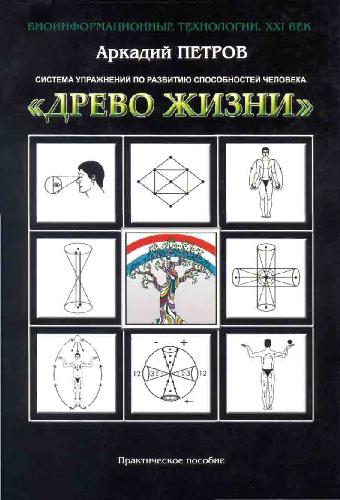
Система упражнений по развитию способностей человека (Практическое пособие)
Автор: Петров Аркадий НаумовичКатегория: Путь к себе
Размер книги: 818 Kb
Сотворение мира (3-х томник)
Автор: Петров Аркадий НаумовичКатегория: Путь к себе
Размер книги: 817 Kb

Только что пользователи скачали эти книги:

Practice Makes Perfect Spanish Verb Tenses, Second Edition (Practice Makes Perfect Series)
Автор: Dorothy RichmondКатегория: Экономика
Размер книги: 1.37 Mb
All By My Selves- Walter, Peanut, Achmed, and Me
Автор: Dunham JeffКатегория: fiction
Размер книги: 566 Kb