- 2 402 202 книги
- Поиск
libcats.org
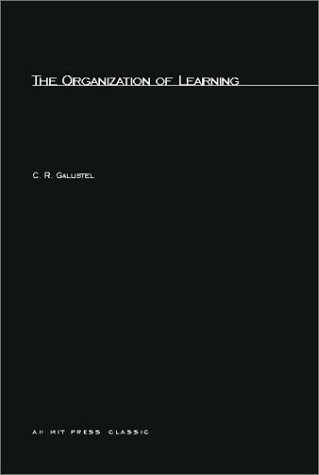



The Organization of Learning
Charles R. GallistelHow do animals represent space, time, number and rate? From insects to humans, Charles Gallistel explores the sophisticated computations performed in these ubiquitous yet neglected domains of animal learning. He proposes new and imaginative hypotheses about brain and mental processes and provides original insights about animal behavior using a computational-representational framework that is an exciting alternative to traditional associative theories of learning. Gallistel argues compellingly that experimental psychologists should begin to view the phenomena of learning within a framework that utilizes as the proper unit of analysis the computation and storage of a quantity, rather than the formation of an association that has been the basis of traditional learning theory. His approach reveals the formal structure of the environmental relationships that animals master to time and orient their behavior. It clarifies what representations different animals can and cannot compute and the nature of the computations by which animals derive these representations. The author backs up this thesis with studies that encompass a vast range of animal learning: animal navigation (the use of dead reckoning and cognitive maps); the mechanisms of timekeeping in the nervous system; the registration and utilization of time of occurrence (circadian phase) in learned behavior; the learning and use of temporal intervals and of numerosity; the computation of rates of occurrence; modern findings and theories of classical conditioning. Gallistel surveys the experimental literature in zoology, biology, neuroscience, and psychology that bears on those aspects of their environment that animals represent and the computations they perform in constructing and utilizing those representations. He reveals the fundamental role these representations play in learning and memory, and the implications of these findings in the search for the cellular basis of memory. Charles R. Gallistel is Professor of Psychology at the University of Pennsylvania. The Organization of Learning is included in the series Learning, Development, and Conceptual Change, edited by Lila Gleitman, Susan Carey, Elissa Newport, and Elizabeth Spelke. A Bradford Book
Скачать книгу бесплатно (chm, 3.22 Mb)
EPUB | FB2 | PDF | MOBI | TXT | RTF
* Конвертация файла может нарушить форматирование оригинала. По-возможности скачивайте файл в оригинальном формате.
Популярные книги за неделю:


Тестирование Дот Ком, или Пособие по жестокому обращению с багами в интернет-стартапах
Автор: Роман Савин
Размер книги: 5.26 Mb
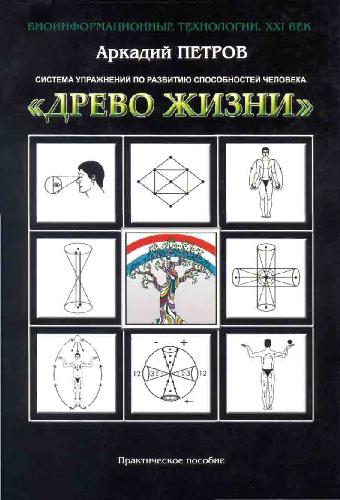
Система упражнений по развитию способностей человека (Практическое пособие)
Автор: Петров Аркадий НаумовичКатегория: Путь к себе
Размер книги: 818 Kb
Сотворение мира (3-х томник)
Автор: Петров Аркадий НаумовичКатегория: Путь к себе
Размер книги: 817 Kb

Только что пользователи скачали эти книги:


Cliffs Quick Review - Writing Grammar, Usage and Style
Автор: Jean Eggenschwiler, Автор: Emily Dotson BiggsКатегория: Chemistry
Размер книги: 11.92 Mb
Квантовая теория. Часть 3: Курс лекций для вузов
Автор: Копытин И.В., Автор: Корнев А.С., Автор: Манаков Н.Л., Автор: Фролов М.В.Категория: Основы квантовой теории, атомной и ядерной физики
Размер книги: 843 Kb
The Theory of Complex Angular Momenta: Gribov Lectures on Theoretical Physics (Cambridge Monographs on Mathematical Physics)
Автор: V. N. GribovКатегория: Математика, Прикладная математика
Размер книги: 2.25 Mb

