- 2 402 202 книги
- Поиск

Solid-State Physics: Introduction to the Theory
Joseph L. Awange, Erik W. GrafarendLearning solid state physics involves a certain degree of maturity, since it involves tying together diverse concepts from many areas of physics. The objective is to understand, in a basic way, how solid materials behave. To do this one needs both a good physical and mathematical background. One definition of solid state physics is that it is the study of the physical (e.g. the electrical, dielectric, magnetic, elastic, and thermal) properties of solids in terms of basic physical laws. In one sense, solid state physics is more like chemistry than some other branches of physics because it focuses on common properties of large classes of materials. It is typical that solid state physics emphasizes how physics properties link to electronic structure. We have retained the term solid state physics, even though condensed matter physics is more commonly used. Condensed matter physics includes liquids and non-crystalline solids such as glass, which we shall not discuss in detail. Modern solid state physics came of age in the late thirties and forties, and had its most extensive expansion with the development of the transistor, integrated circuits, and microelectronics. Most of microelectronics, however, is limited to the properties of inhomogeneously doped semiconductors. Solid state physics includes many other areas of course; among the largest of these are ferromagnetic materials, and superconductors. Just a little less than half of all working physicists are in condensed matter.
A course in solid state physics typically begins with three broad areas: (1) How and why atoms bind together to form solids, (2) Lattice vibrations and phonons, and (3) Electrons in solids. One would then typically apply the above to (4) Interactions especially of electrons with phonons, (5) Metals, the Fermi surface and alloys, (6) Semiconductors, (7) Magnetism, (8) Superconductivity, (9) Dielectrics and ferroelectrics, (10) Optical properties, (11) Defects, and (12) Certain other modern topics such as layered materials, quantum Hall effect, mesoscopics, nanophysics, and soft condensed matter. In this book, we will consider all of these.

Хоббит, или Туда и обратно (пер. М. Каменкович, С. Степанов)
Автор: Толкиен Джон Роналд Руэл

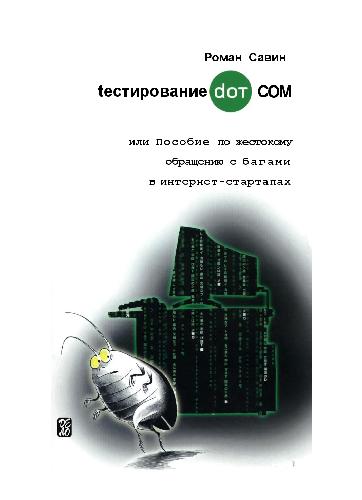
Тестирование Дот Ком, или Пособие по жестокому обращению с багами в интернет-стартапах
Автор: Роман Савин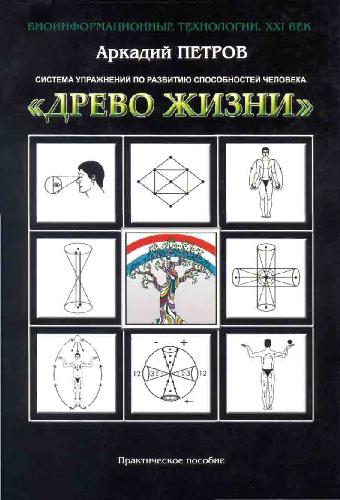
Система упражнений по развитию способностей человека (Практическое пособие)
Автор: Петров Аркадий Наумович
Сотворение мира (3-х томник)
Автор: Петров Аркадий Наумович

Practical Aspects of Knowledge Management: 6th Internatioal Conference, Pakm 2006, Vienna, Austria, November 30-December 1, 2006, Proceedings
Автор: Ulrich Reimer, Автор: Dimitris Karagiannis

